Showing posts with label exoffenders. Show all posts

Thursday, March 8, 2012

Ex-Offender Turnout In Iowa

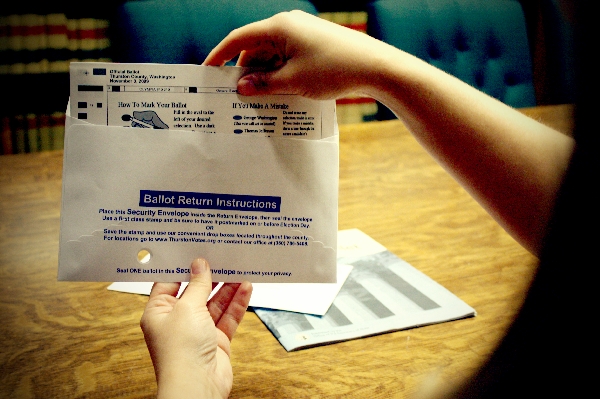
A recent study examines the effects of a 2005 Executive Order in Iowa that automatically restored voting rights to former felons who had completed their sentence. Before 2005, persons with felony convictions had to apply to the Governor to have their voting rights restored. Since the Executive Order was enacted, an estimated 100,000 Iowa ex-felons have had their voting rights restored.

Moreover, the analysis found that voter turnout among persons with felony convictions increased substantially following the policy change and that notification of voting rights restoration increased voter turnout among the released prisoner population by four to eight percentage points in the 2008 presidential election.

Unfortunately, in January 2011, Iowa Governor Terry Branstad issued his own Executive Order that rescinded the 2005 advancement, once again requiring ex-offenders to petition the Governor individually to have their voting rights restored. The study's authors predict that this will inhibit turnout, noting that many persons with felony convictions would vote but are discouraged because of the "burdensome application process."

This is particularly unfortunate because, in Iowa, African-Americans account for almost 25% of the prison population, although they make up only 2.8% of the state's population. This can severely impact both the civic and economic health of the community, as well as the correctional system. Research has shown that restoring voting rights to ex-offenders can reduce the recidivism rates of released prisoners.

What are the voting rights of felons in your state? Find out on our website and check out our felon disenfranchisement factsheet in English and Spanish.

(Image Source)

Friday, August 12, 2011

Why We Should Restore Ex-offender Voting Rights

The Florida Parole Commission released a new study showing that an ex-offender whose civil rights have been restored is much less likely to return to prison than others in the released prisoner population.

Of the 30,672 former Florida felons that had their voting rights restored in 2009 and 2010, about 11% ended up back in custody. The recidivism rate for the overall released prisoner population is 33%.

Unfortunately, in March of this year, Governor Rick Scott and members of his Cabinet voted to eliminate the automatic restoration of voting rights for convicted felons. They claim that only individuals who have demonstrated a commitment to living a crime-free life should be eligible to vote, and that the (minimum) 5 year waiting period would provide the opportunity for ex-offenders to show that commitment.

However, the report contradicts the governor's decision, and shows that streamlining the clemency process and restoring voting rights produces tangible benefits for both the individual and the community. In Florida, nearly 90,000 ex-offenders are currently waiting to have their civil rights restored. Let's hope this report makes Governor Scott reconsider how long they should have to wait to vote again.

(Image Source)


Monday, December 13, 2010

Felon Disenfranchisement in 2010

Felon disenfranchisement has received a lot of press this year, bringing the issue a bit of celebrity.

In January, a three-judge appellate panel applied the federal Voting Rights Act to Washington’s felon disenfranchisement law, overturning a state law that bars felons in prison and under community supervision from voting. However, in October a full sitting of the Ninth Circuit Court of Appeals reversed the ruling and upheld Washington's ban against felon voting. In the process, the court rejected the claim that the constitutional ban discriminates against racial minorities and violates the Voting Rights Act. To challenge the ban, the court said that inmates would have to show that the criminal justice system is "infected by intentional discrimination or that the felon disenfranchisement law was enacted with such intent."

In October, the U.S. Supreme Court declined to hear a legal challenge to the Massachusetts constitutional provision that denies convicted felons in prison the right to vote. The petitioners claimed that the law is racially discriminatory (and in violation of the Voting Rights Act) because blacks and Hispanics are imprisoned at disproportionate rates.

Despite the rulings, a New York Times editorial postured that "Their Debt is Paid." The editorial also found that more than five million Americans were unable to vote in November because of what the author described as "unjust and archaic state laws that disenfranchise former offenders, even when they have gone on to live crime-free lives."

However, there is hope as many states begin to revisit these laws. The Sentencing Project found that in the last 13 years, 23 states have given convicted felons increased voting rights, adding 800,000 former felons to voter rolls. Nine states have either repealed or amended mandates that permanently disenfranchised convicted felons, while eight have made the process to have an individual's voting rights restored easier, and three states have given those on probation and parole the right to vote.

To learn more about the voting rights of felons in you state, visit our website and check out our fact sheet, available in English and Spanish. In the meantime what’s your take on felon voting rights? Should felons be allowed to vote while incarcerated (as is the case in Vermont and Maine), should full voting rights be restored automatically upon release, or should ex-felons have to finish their parole term first?

(Image Source)

Share

Thursday, January 7, 2010

Court rules against Washington's ban on felon voting

(WA SOS blog, NY Times)

The 9th Circuit Court of Appeals has thrown out Washington’s longstanding ban on voting by felons.

The surprise 2-1 ruling comes in a case brought in U.S. District Court in Eastern Washington almost 14 years ago by Muhammad Shabazz Farrakhan and three other black inmates, and by a Native American and a Latino inmate. The inmates said minorities are disproportionately prosecuted and sentenced to prison, and that their automatic disenfranchisement violates the federal Voting Rights Act.

The ruling means the more than 18,000 felons behind bars in the state could get back their right to vote -- without having to wait until they are released from prison and are no longer on probation or parole. The ruling also could open the door to similar lawsuits in the 9th Circuit's eight other states and two territories.

In recent years, only two states - Maine and Vermont - have allowed inmates the right to vote.

Tuesday, August 18, 2009

New publication compiles first-time voter stories

(Photo- Brennan Center for Justice)
My First Vote, a new publication from the Brennan Center for Justice, is a compilation of stories from people across the country who voted for the first time in November 2008 after having lost, and then regained, their right to vote following a criminal conviction.

Here's an excerpt:
I’ve been battling substance abuse for thirty years and have been in and out of prison all of my life. But I’ve been out, and clean, for more than four years. My life has completely changed. And on November 4th, with millions of Americans, I had a say about what happens in our country. There were tears in my eyes as I waited to vote. I felt like I was finally a productive member of society. I’ve never before felt like I could make a difference in terms of what happens around me. But I walked out of the polling place on Election Day feeling like I mattered, that I made a difference. I realized how far I’ve come. Amazing. -Linda Steele, New York, NY

Friday, February 13, 2009

Alabama to finally define "moral turpitude" felonies

From Votelaw blog: State law finally would have a definitive list of 70 felonies that disqualify from voting people convicted of the crimes, if a bill cleared by a legislative panel Wednesday becomes law.

Alabama's constitution disqualifies from voting anyone convicted of a "felony involving moral turpitude." But state law has no comprehensive list of those felonies.

A bill sponsored by state Rep. Jimmy Martin, D-Clanton, would write into the law a list of felonies that involve moral turpitude.

The constitution and elections committee of the state House of Representatives voted 8-3 for the bill, which could be debated by the full 105-member House as soon as next week. -- If it becomes law, bill would list 70 felonies that disqualify people from voting - al.com.

Note: the bill may be downloaded here.

Wednesday, August 27, 2008

Civil Rights Lawyer Registers Ex-Offenders

The Washington Post has this story on Reggie Mitchell, a leader of a disparate group of grass-roots Democrats and civil rights activists who are trying to register tens of thousands of newly eligible felons.

Sunday, July 6, 2008

New Resource: State by State Felony Disenfranchisement Guide

This comprehensive survey by Margaret Colgate Love describes for each United States jurisdiction the laws and practices relating to restoration of rights and obtaining relief from the collateral disabilities and penalties that accompany a criminal conviction. It is the first-of-its-kind, and it illustrates the extraordinary variety and complexity of state and federal laws that impose a continuing burden on convicted persons long after the court-imposed sentence has been fully discharged. It is an important resource for policymakers interested in offender reentry and reintegration, for practitioners at all levels of the criminal justice system, and for people with a criminal record who are seeking to put their past behind them.

Read The Sentencing Project's executive summary of "Relief from the Collateral Consequences of a Criminal Conviction: A State-By-State Resource Guide."

Order the book.

Wednesday, July 2, 2008

Mississippi Holds Voter Registration Day for Ex-Felons

On 7/2/2008, former State Rep. Erik R. Fleming, along with the ACLU and NAACP hosted the 4th Annual Mississippi Voter Registration Day.

The purpose of the event is to make sure that individuals with felony convictions understand their voting rights. According to national surveys, more than 140,000 Mississippians have lost their voting rights as a result of felony convictions. Most Mississippians who have been convicted of a felony do not know their voting rights once they’ve completed the terms of their sentences; the event educates citizens about the state law and the legal processes to have their voting rights restored. Read more.

Tuesday, July 1, 2008

PBS Film Documentary Tonight: "Election Day"

On PBS tomorrow at 10 p.m., POV will broadcast "Election Day," a film by Katy Chevigny that combines 11 stories - shot simultaneously on November 2, 2004, from dawn until long past midnight - into one. A segment of the documentary highlights felon disenfranchisement with formerly incarcerated New York City resident Leon Batts who just regained his right to vote. Preparing to cast his first ballot, Batts sees his vote as one representing all individuals denied the right because of a felony conviction. But Batts finds casting a vote more problematic than he anticipated.
VIEW "ELECTION DAY" TRAILER

Sunday, June 22, 2008

Va. Governor Kaine to Expedite Re-enfranchisement of Nonviolent Offenders

Civic and social organizations are teaming with Virginia Gov. Timothy M. Kaine to try to add thousands of nonviolent offenders to the voting rolls in time for the November election. The felons also would get their rights back to sit on a jury and hold public office. Virginia currently is one of only 2 states to permanently disenfranchise those with a criminal conviction. Groups like the NAACP, the ACLU, Democracy South and the Virginia Voter Restoration Project have taken out newspaper ads, spread the word through churches and gone door to door, urging felons to apply to Kaine to restore their voting rights. The effort has earned criticism from the right. "I don' t know a lot of young Republicans who end up being felons," said Del. C. Todd Gilbert (R-Shenandoah). "Clearly the groups that are soliciting these felons to get their rights restored are predisposed to be in support of Obama, and I am sure this registration effort is designed to help their candidate." Read more.
Link
http://www.washingtonpost.com/wp-dyn/content/article/2008/06/16/AR2008061602535_2.html
Picture
http://www.acluva.org/restoreourvote/images/RestoreOurVoteicon.jpg