Wednesday, August 27, 2008

Oregon introduces unique accessible voting system

Electionline reports on Oregon's new Alternative Format Ballot, which allows voters with visual or manual disabilities to cast votes at home...

For the majority of her adult life, Angel Hale was denied a right many Americans take for granted.

In 1986, Hale lost her sight and since then has been unable to cast a ballot without assistance.

All of that changed this May however, when Hale and thousands of other Oregonians with a wide range of disabilities were able to cast their ballots autonomously for the first time thanks to the implementation of Oregon’s unique Alternative Format Ballot (AFB).

“It was liberating,” Hale said by phone from her home in Oregon, the same place where she cast her independent ballot as part of the state’s vote-by-mail system.

Hale, along with other voters with visual and/or manual dexterity impairments in the state now have the ability to cast ballots at home using a computer program that requires Web access and a printer to cast and verify ballots.

The program works in conjunction with alternative devices which assist disabled voters to understand and fill out ballots. Because of this feature the AFB can work with devices like screen readers, sip-puff devices, screen enlargers, Braille displays, switches, joysticks and other assistive technologies.

The user receives the AFB as an electronic document either through e-mail or a CD. Once completed, the voter prints out the AFB and sends it through the mail using the envelopes provided. Like the rest of the state’s absentee ballots, it is placed in a secrecy envelope which is then placed inside the signature envelope, both of which provide security and identification of the voter to officials.

“AFBs are essentially a ballot in a different form which replaces paper. The ballot is processed in the same way as everyone else once sent by mail," said Gene Newton of the Help America Vote Act (HAVA) Program office in Oregon.

Newton likened the process to voting with a pen or pencil.

For Hale, voting with the new system has been anything but typical.

“The process has been incredible,” Hale said. “Besides working on the pilot for the AFB this is my first time voting independently in my life.

Civil Rights Lawyer Registers Ex-Offenders

The Washington Post has this story on Reggie Mitchell, a leader of a disparate group of grass-roots Democrats and civil rights activists who are trying to register tens of thousands of newly eligible felons.

Californians May Soon Be Able to Register Online

Californians may soon be able to use their computers to register to vote and they can thank the state Department of Motor Vehicles for the chance. The San Francisco Chronicle has this story...

How Design Can Save Democracy

Check out this fun and informative interactive feature from AIGA, as profiled in the New York Times, which helps identify common ballot design problems and offer suggestions for improvements. Read the supporting NYT Opinion piece from AIGA's Richard Grefé and Jessica Friedman Hewitt.

Report: The Myth of Noncitizen Voting

In a recent segment, CNN anchor Lou Dobbs told viewers that substantial evidence suggests that large numbers of non-citizens, including undocumented immigrants, are voting in federal elections and could be the deciding factor in November's elections. The story primarily cites a recent report published by the Heritage Foundation. The report is written by former recess-appointed FEC Commissioner Hans von Spakovsky, whose troubling record on voting rights caused him to withdraw his name from consideration for a permanent FEC seat. Von Spakovsky's report contains gross distortions and represents an attempt to support a policy agenda that would disenfranchise many U.S. citizens. Truth in Immigration has written a report scrutinizing the claims of the Heritage Foundation study.

Thursday, August 21, 2008

New Resource for Local Races

Stateline.org is launching a new 2008 interactive guide to help voters keep track of the 11 gubernatorial, 11 attorneys general and seven secretary of state races and more than 100 high-profile statewide ballot measures.

Tuesday, August 19, 2008

Alabama's Homeless Vote

Alabama homeless assistance groups are getting out the vote among their constituents, reports the Montgomery Advertiser, which ran a story this week chronicling a 67-year-old homeless man's desire to register and cast his vote this election season.

"This is really the first time since we've been open that there has been a presidential election," said Beth Marra, director of Family Promise of Montgomery, which is beginning to concentrate on registering its homeless constituents to vote. "It's important to have this available to them because they're still citizens. They're working and struggling to get back to stability, but they should still participate in this process because it is their right and responsibility as a citizen."

Michael Stoops, the acting executive director of the National Coalition for the Homeless, said his organization is asking advocate groups in all 50 states to get people registered. Special drives will be held Sept. 21-27 to register homeless and low-income people to vote.

Visit the Coalition's "You Don't Need a Home To Vote" campaign website for resources on registering homeless populations to vote.

Google Launches Election Website

Google Inc has launched a 2008 election website and three new applications that Google argues will help voters get political information online.
"We will be helping voters find information online and helping the parties themselves to connect with voters and draw them in," said Bob Boorstin, director of corporate and policy communications at Google.
The new Google 2008 election Web site features a new YouTube elections video search that asks "What did the candidates say?" which allows users to put in search terms such as "national security" and find exactly where in speeches the candidates said the words, and the "PowerReaders" application, which aggregates political news stories on the web that candidates and a select handful of political reporters are reading.
Visit the site.

GOP seeks probe of military voting assistance programs

A group of 35 congressional Republicans has called for an investigation by the Justice Department into the possible disenfranchisement of millions of military service members in the upcoming presidential election.

“We have failed to adequately protect the right of our troops to participate in our democratic process” by not providing adequate assistance to service members and their families who are away from their homes in the United States or overseas, the 13 senators and 22 representatives wrote in an Aug. 1 letter to Attorney General Michael Mukasey. “We ask that the DOJ investigate and determine whether the Federal Voting Assistance Program [FVAP] is fulfilling its legal obligations to provide overseas U.S. military service members and their dependents with the necessary information and assistance to register to vote, request and receive absentee ballots, and vote.”

The federal voting assistance program recently revamped its website, www.fvap.gov.

Monday, August 18, 2008

Report: EDR in Nebraska (Demos)

This report from R. Michael Alvarez (Caltech) and Jonathan Nagler (NYU) from Demos analyzes likely effects of introducing Election Day Registration in Nebraska, and includes the following estimates of increases in turnout for specific groups of Nebraska citizens under EDR:
  • Overall turnout could go up by 5.4 percent.
  • Turnout among those aged 18 to 25 could increase by 10.6 percent.
  • Turnout for those who have moved in the last six months could increase by 9.5 percent.
  • Turnout for Latinos could increase by 9.0 percent.
Download the report here.

New Report: 2008 Primary in Review, Electionline.org

A review of the 2008 primary season has found that the dramatically increased number of voters taxed the election system more than any administrative problem. Millions of voters – many of them first timers – crowded polling places around the country, doubling recent turnout in some states.
View full report
July 24, 2008 -
2008 Primary in Review (report) (Adobe PDF

New Report: Voter Confidence in Context and the Effect of Winning

Using national survey data from the 2006 general election, authors Morgan H. Llewellyn, Thad E. Hall and R. Michael Alvarez of the Caltech/MIT Voting Technology Project conclude that voter confidence in the voting process is influenced by the context of the election, as well as who wins and what voting technology is used. Supporters of winning candidates/parties have more post-election confidence in the election than supporters of losing candidates/parties. And voters using electronic voting machines equipped with voter-verified paper audit trails increases voters’ confidence in the process as well.Voter Confidence in Context and the Effect of Winning, August 2008

Saturday, July 26, 2008

NVEN in the News: MSNBC

Elizabeth Wasserman reports on nonprofits' voter engagement work this election season and on the challenges facing 501(c)(3)s in their attempt to maintain nonpartisanship. Read her discussion of NVEN, which quotes Minnesota Participation Project coordinator Maureen Cisneros!

Thursday, July 24, 2008

American Democracy Institute Launches I Vote You Vote

On July 14, The American Democracy Institute announced the launch of I Vote You
Vote (www.ivoteyouvote.com), a website that empowers voters to guide their non-voting friends
and family members through the registration, education and mobilization process of voter
participation. “Half of young voters cite the encouragement of friends and family as their reason for voting,”said American Democracy Institute President John Hart. “With tools like I Vote You Vote, we’re confident that we can increase young adult voter turnout for the upcoming general election.” Visit the site. Read the press release.

New Resource: Overview of California's 2008 Redistricting Reform

The Center for Governmental Studies (CGS) has published a comprehensive overview of California's 2008 redistricting reform proposals to assist legislators, the media, and interested citizens in understanding and comparing the measures. In an easy-to-read chart format, the Overview (pdf) details the major provisions of California's current redistricting law and compares them with the pending legislative and ballot initiative proposals listed below:

  • The current redistricting law, Article XXI of the California Constitution
  • Voters FIRST Initiative, Proposition 11, sponsored by California Common Cause, AARP, Governor Schwarzenegger and the Los Angeles Chamber of Commerce
  • Assembly Constitutional Amendment 1 (ACA 1) and AB 3069, sponsored by former Speaker of the California Assembly Fabian Núñez
  • The model redistricting plan previously developed by CGS and other civic organizations

Wednesday, July 23, 2008

OVF launches Youth Vote Overseas

Overseas Vote Foundation announced the first site designed specifically for young voters abroad, Youth Vote Overseas, at the 6th Annual American Democracy Project (ADP) National Meeting on June 12, 2008 in Snowbird, Utah.

The Youth Vote Overseas website,
started as a Facebook group called "Youth Vote Overseas," enables users to easily navigate the complicated overseas absentee voting process by helping them fill out the registration form online and providing the mailing address, instructions and resources for further information.

Tuesday, July 22, 2008

Restoring Voting Rights in Connecticut

Community Partners in Action of Connecticut, one of the nation's oldest non-profit agencies, has launched a statewide campaign to assist ex-offenders with restoration of voting rights. Connecticut recently changed its law to make it more automatic for ex-offenders to register and vote. It is distributing its “Claim Your Rights” poster to display at nonprofit and government agencies across the state.

Thursday, July 17, 2008

Missouri DSS Ordered to Ensure Citizens Registered

On July 15, a U.S. District Court in Missouri ordered the Department of Social Services to ensure that each local welfare office in the state asks everyone who seeks help if that person is registered to vote, and to provide a voter registration form for those who aren’t registered. The 1993 “Motor Voter Law” passed by Congress in 1993 requires this activity. ACORN sued the Missouri Department of Social Services after gathering evidence that the federal law wasn’t being followed.

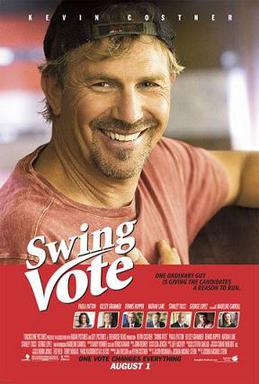
New Movie: "Swing Vote"

“Swing Vote”, a new movie from Disney opening August 1 and starring Kevin Costner, is about an extraordinarily close presidential election. It is so close, the results of one particular state will determine who wins the presidency…and the results in that state, even after a recount, are tied. But because one particular voter in that state cast an unrecorded vote on an electronic voting machine, he is permitted to vote again. Visit the movie's website.

Wednesday, July 16, 2008

New Report: HAVA Impact on First-Time Voters

A new report from the EAC looks at the HAVA-mandated ID requirements for these first-time voters when they go to the polls. View "Case Studies on the Impact of the Help America Vote Act's Identification Requirements for First-Time Voters" (PDF), U.S. Election Assistance Commission (May 2008)